Here is how daily horoscopes are written, in one honest sentence: a single writer produces twelve short readings at once, usually days or weeks ahead of publication, using each sign’s archetype and the current planetary calendar as prompts, and phrases them broadly enough that millions of readers can find themselves inside.
That is true of newspaper columns, of the big horoscope apps, and, we will say it plainly, of the daily horoscope on this site. None of this makes the ritual worthless. It makes it a specific kind of tool, a daily reflection prompt organized around twelve durable archetypes. Once you see how the sausage is made, you can use it for what it actually does rather than what it pretends to do. This guide walks through the format’s newspaper origins, the modern writing process, the evidence on accuracy, and exactly how our own daily readings work.
Want to see today’s? Our daily horoscope page covers all twelve signs, free.
Key Takeaways
– Daily horoscopes are written in batches by one writer covering all twelve signs, guided by sign archetypes and the planetary calendar, and worded to fit wide audiences.
– The format is a circulation invention: it descends from R.H. Naylor’s August 1930 Sunday Express column, and the twelve-sign version spread because it “could be changed endlessly” (Wikipedia: R.H. Naylor).
– Horoscope reading is common and casual: 28% of US adults consult astrology at least yearly, but only 5% check weekly and just 1% rely on it heavily for decisions (Pew Research Center, 2025).
– The felt accuracy is mostly the Barnum effect, our tendency to accept resonant general statements as personal (Barnum effect).
– This site’s daily horoscope is pre-written, sign-specific reflection content on a daily rotation, and we think saying so out loud is exactly how this kind of content should be run.
Jump to a section:
- How Daily Horoscopes Are Written: The Short Answer
- Who Invented the Daily Horoscope?
- What Does a Horoscope Writer Actually Do?
- Why Do Horoscopes Feel So Accurate?
- How Popular Are Horoscopes in 2026?
- How Often Do People Actually Check Their Horoscope?
- How Daily Horoscopes Are Written Here (Full Transparency)
- How Should You Read a Daily Horoscope?
- Frequently Asked Questions
New to this site? Start with the Destiny Matrix pillar guide, our core system built on a different tradition entirely.
How Daily Horoscopes Are Written: The Short Answer
A daily horoscope column is one writer’s twelve-part composition, not twelve separate consultations. The writer, who may be a practicing astrologer, a staff journalist, or a content team, sits down with two inputs: the twelve sign archetypes, which never change, and the day’s planetary positions, which function as a rotating prompt calendar. From those they produce twelve entries of forty to eighty words each, written to be encouraging, broadly applicable, and safe to publish days or weeks in advance.
The load-bearing part is the archetypes. Aries entries lean on initiative and impatience, Taurus on stability and comfort, Virgo on detail and self-criticism, and so on. A skilled writer rotates themes through the signs, love today, money tomorrow, a gentle warning the day after, so the column feels varied across a week while each entry stays true to its sign’s character. Syndication does the rest: one column is sold to dozens or hundreds of outlets, which is why the horoscope in your local paper often matches one printed a thousand miles away.
Who Invented the Daily Horoscope?
The daily horoscope is a newspaper circulation invention with a precise birthday: August 24, 1930. That day the London Sunday Express ran R.H. Naylor’s article “What The Stars Foretell For The New Princess,” a forecast cast for the newborn Princess Margaret, and reader response was strong enough that the paper made star columns a regular feature (Wikipedia: R.H. Naylor).
The twelve-sign format we know arrived over the following years, and the reason it won is disarmingly commercial. Naylor’s early columns forecast by birth month; by 1937 he had settled on the twelve zodiac signs for his “Your Stars” feature, a format that, as the historical record puts it, could be changed endlessly, making it an ideal recurring newspaper feature. Twelve short slots, refreshed daily, applicable to every reader ever born: it is one of the great content formats of the twentieth century, engineered for repeatability rather than revelation. Nearly a century later, apps have replaced broadsheets and the format has not needed to change at all.
What Does a Horoscope Writer Actually Do?
The working day of a horoscope writer looks like any other columnist’s: a content calendar, a word count, and deadlines, with an ephemeris where other writers keep a news feed.
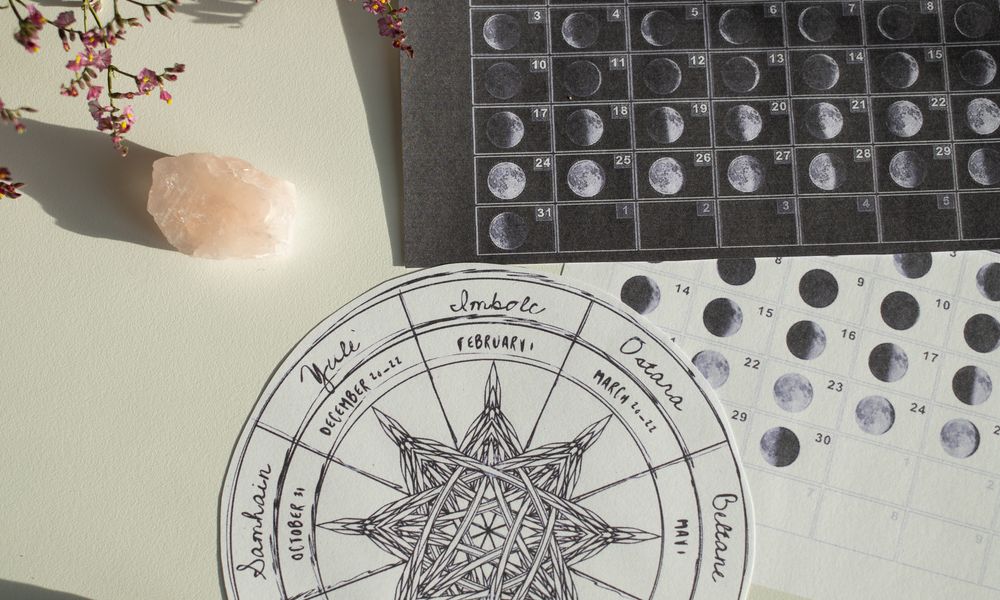
- The prompt calendar. Planetary movements, a full moon, a Mercury retrograde, a Venus sign change, give each day a theme. Astrologically inclined writers treat these as meaningful; pragmatic ones treat them as a rotation device that keeps twelve daily entries from repeating. Either way, the transit calendar is the column’s editorial calendar.
- Batch writing. Columns are produced ahead, often a week or a month at a time. Nothing about the format requires day-of composition, which is your first clue about what the entries can and cannot contain.
- Generality as a craft skill. The working phrase is applicable-to-many: “a conversation you have been avoiding may finally feel possible” fits almost any human week. Writing twelve of these daily without becoming stale is a genuine skill, closer to greeting-card craft than to prophecy.
The interchangeability is not a cynic’s theory; it occasionally surfaces in public. In March 2021, the Toronto Star’s public editor, Bruce Campion-Smith, disclosed in a column titled “An astrologer’s recycled predictions” that the paper had dropped its syndicated astrologer after an internal review found at least ten recent columns recycled old horoscopes.
The detail that lands hardest: a March forecast for Virgo was nearly identical to an earlier October forecast for Aquarius. Different sign, different date, different planetary sky, same text. No reader noticed until the paper audited it, which is the format’s flexibility working exactly as designed.
Why Do Horoscopes Feel So Accurate?
Horoscopes feel accurate because of the Barnum effect, the well-documented tendency to rate general, flattering statements as uncannily personal. In the classic 1949 demonstration, students given an identical generic personality sketch rated it 4.30 out of 5 for accuracy, each believing it had been written for them (Barnum effect). A daily horoscope is engineered, sign by sign, out of exactly such statements, so the resonance is a feature of the writing, not evidence of the stars.
Most Americans hold the two thoughts at once. In 2018 survey data, 58% said astrology is “not at all scientific” (NSB Science and Engineering Indicators 2020), and yet, as the next section shows, more than a quarter still check. That is not hypocrisy; it is people correctly sensing that a horoscope can be useful the way a journal prompt is useful, without being true the way a weather forecast is true. We apply the same standard to our own systems in our honest review of whether the Destiny Matrix is accurate.
How Popular Are Horoscopes in 2026?
Astrology remains a mass habit with a strong young skew. Pew Research Center’s May 2025 study found 28% of US adults consult astrology or a horoscope at least yearly, ranging from 37% of adults under 30 down to 20% of those 65 and older (Pew Research Center, “30% of Americans Consult Astrology, Tarot Cards or Fortune Tellers”, 2025). Women consult at nearly twice the rate of men, 37% versus 19%, and among women under 50 the figure reaches 46%.
The business built on that habit is substantial. US psychic services generate about $2.3 billion in annual revenue (IBISWorld, 2026), and the app generation has its own landmarks: Co-Star, with about 4.3 million monthly active users, was acquired by the AI company Midjourney in July 2026 (TechCrunch). Every one of those businesses runs on writing produced essentially the way this guide describes.
How Often Do People Actually Check Their Horoscope?
Mostly casually, which is reassuring. Pew’s frequency breakdown shows only 5% of US adults consult astrology at least weekly, 7% check once or twice a month, 16% once or twice a year, and 71% never do. Engagement is also light in spirit: among the 30% who consult astrology, tarot, or fortune tellers at all, twice as many say they do it “just for fun” as for “helpful insights,” and only 1% of adults rely on these practices a lot for major decisions (Pew Research Center, 2025).
The same numbers as a quick reference:
| How often Americans consult astrology | Share of US adults |
|---|---|
| At least weekly | 5% |
| Once or twice a month | 7% |
| Once or twice a year | 16% |
| Never | 71% |
Shares sum to 99%; the remainder gave no answer (Pew Research Center, May 2025). That light-touch pattern is the healthy one, and it is the audience we write for.
How Daily Horoscopes Are Written Here (Full Transparency)
Our daily horoscope is a library of pre-written, sign-specific readings served on a daily rotation: each sign’s reading is selected by the date, every reader of a sign sees the same text on the same day, and the readings refresh at midnight UTC. No astrologer casts a fresh chart for each morning, and we are telling you that in the article rather than hoping you will not ask.
We think transparency is not just more honest but more useful, for a concrete reason: what a daily horoscope delivers does not depend on how it was generated. The value, a moment of pause, a theme to hold against your actual day, one small intention, comes from the reading ritual, not from the production method.
A column “cast fresh” each dawn and a well-written rotation deliver the identical experience to the reader, which is exactly what the Toronto Star episode demonstrated from the other direction. Once you accept that, the honest version is strictly better, because nobody is paying for a mystique that does no work. Our daily tarot card runs on the same open principle.
Each reading is written to its sign’s archetype, the same twelve characters Naylor’s heirs have been writing for since the 1930s, and framed as reflection: a theme, a question, a nudge. What we ask of the format is the same thing we ask readers to take from it, a useful prompt, honestly labeled.
How Should You Read a Daily Horoscope?
Read it the way you would read a good journal prompt: once, in the morning, as a lens for the day you are actually having, and never as an instruction.
- Take the theme, not the forecast. “A tension around money may surface” is not information about your Tuesday; it is an invitation to check in on your actual relationship with money today.
- Set one intention from it. The reading earns its minute if you leave with a single concrete thought: have the conversation, take the walk, recheck the budget.
- Never move real decisions onto it. The 1% of people who rely heavily on these practices for major decisions are using a greeting card as a map. Keep decisions with information, professionals, and the people involved.
- Want something personal? Use a birth-date system. A sun-sign column divides humanity into twelve; that is its design limit. If you want a reflection tool computed from your specific birth date, that is what the free Destiny Matrix calculator is for, and the same evidence-aware framing applies there too.
I spent a month one year reading my horoscope across three different apps each morning, partly as an experiment and partly out of honest curiosity, and the disagreements were the education. One app promised a career breakthrough while another counseled patience with delays, on the same day, for the same sign.
What finally struck me was that the day I got the most from the habit was the day I read only one and actually sat with it. The value was never in the prediction, which could not even agree with itself. It was in the ninety seconds of reflection the reading triggered, and that is the product, a decent one when it is labeled honestly.
Frequently Asked Questions
Who actually writes daily horoscopes?
Usually one person per outlet: a practicing astrologer, a staff writer, or a syndicated columnist whose work runs in many publications at once. All twelve signs are written together in batches, ahead of publication, guided by sign archetypes and the planetary calendar.
Are daily horoscopes written in advance?
Yes, almost always. Columns and app content are typically produced days to weeks ahead, because the format’s inputs, sign archetypes and planetary positions, are known far in advance. Nothing about a daily horoscope requires it to be written on the day you read it.
Are daily horoscopes real astrology?
They are astrology’s most simplified form. A sun-sign column reduces a full birth chart to one variable, your sun sign, so it divides everyone into twelve groups. Even most practicing astrologers consider it entertainment-grade compared with a full chart reading, and the scientific evidence does not support predictive power for either.
Why do different apps give different horoscopes for the same sign?
Because each outlet’s writer makes different editorial choices from the same planetary calendar. There is no central source of “correct” daily guidance for a sign, which is itself a useful clue about the format’s nature.
Is the horoscope on this site written fresh each day?
No, and we say so openly. Ours is a library of pre-written, sign-specific reflection readings rotated by date, refreshing at midnight UTC. The reading ritual, a theme, a pause, one intention, works the same either way, which is why we choose the honest version.
Now you know how daily horoscopes are written, so use yours accordingly. Check the daily horoscope, take the theme as a prompt rather than a promise, and if you want a reflection tool built from your full birth date instead of one-twelfth of the sky, run the free Destiny Matrix calculator next.
Sources
- Wikipedia. “R. H. Naylor” (August 24, 1930 Sunday Express column; twelve-sign “Your Stars” format by 1937, “could be changed endlessly”). Retrieved 2026-07-29. https://en.wikipedia.org/wiki/R._H._Naylor
- Pew Research Center. “30% of Americans Consult Astrology, Tarot Cards or Fortune Tellers” (astrology yearly: 28% all adults, 37/31/25/20 by age, women 37% vs men 19%, women 18-49 46%; frequency 5/7/16/71; fun-vs-insight 20%/10%; 1% rely a lot; n = 9,593, surveyed Oct 2024). May 21, 2025. Retrieved 2026-07-29. https://www.pewresearch.org/religion/2025/05/21/3-in-10-americans-consult-astrology-tarot-cards-or-fortune-tellers/
- Toronto Star (public editor Bruce Campion-Smith). “An astrologer’s recycled predictions” (syndicated astrologer dropped after at least ten columns found recycled, including a Virgo forecast repeating an earlier Aquarius one). March 2021. Original paywalled; secondary coverage: True North, March 23, 2021 (bot-protected, loads in browsers). https://tnc.news/2021/03/23/toronto-star-fires-astrologist-for-repeating-predictions/
- Bertram Forer’s 1949 classroom demonstration, via Wikipedia, “Barnum effect” (4.30/5 accuracy rating for an identical generic sketch). Retrieved 2026-07-29. https://en.wikipedia.org/wiki/Barnum_effect
- National Science Board. “Science and Engineering Indicators 2020: Public Familiarity With S&T Facts” (58% of Americans said astrology is “not at all scientific,” 2018 GSS data). Retrieved 2026-07-29. https://ncses.nsf.gov/pubs/nsb20207/public-familiarity-with-s-t-facts
- IBISWorld. “Psychic Services in the US – Industry Analysis” (~$2.3B revenue, 2026). Retrieved 2026-07-29. https://www.ibisworld.com/united-states/industry/psychic-services/4413/
- TechCrunch. “Midjourney acquired the astrology app Co-Star” (~4.3M monthly active users). July 24, 2026. Retrieved 2026-07-29. https://techcrunch.com/2026/07/24/midjourney-acquired-the-astrology-app-co-star/