Your Destiny Matrix Love Line is the diagonal sequence of positions that maps your relationship blueprint, and it is the most emotionally charged line in any paid reading. In 2025, Pew Research Center found that 30% of U.S. adults consult astrology, tarot, or fortune tellers at least once a year (Pew Research Center, “3 in 10 Americans Consult Astrology, Tarot Cards or Fortune Tellers,” May 2025), and relationship questions are the most common reason people book. This guide covers what the line is, how to calculate yours, what each arcana 1 to 22 reveals as your romantic archetype, and how to use it to break the repeating partner patterns most people never name.
Want to see your own Love Line numbers right now? Generate your free Destiny Matrix reading and look at the diagonal running from the center toward the top-left corner of your diamond.
Key Takeaways
– The Destiny Matrix Love Line is a diagonal sequence of positions that maps your romantic style, relationship channel, and partnership block.
– Each position has a high expression (integrated form) and a low expression (shadow form); read both with equal weight.
– In 2025, Pew Research Center found that 46% of U.S. women aged 18 to 49 consult astrology annually, with relationship decisions as a top driver (Pew Research Center, May 2025).
– The Love Line names your blueprint; integrating the shadow is the work.
– Read it alongside your Soul Arcana for the most complete relationship picture.
Jump to a section:
- What Is the Destiny Matrix Love Line?
- How Is the Love Line Calculated?
- What Does Each Love Line Position Mean?
- What Each Arcana Means as Your Relationship Archetype
- How Do You Use Your Love Line in Practice?
- Love Line vs Other Chart Positions
- Common Love Line Mistakes
- Frequently Asked Questions
For the bigger picture of the system this position sits inside, see our pillar guide: What Is Destiny Matrix? Frequently Asked Questions (2026).
What Is the Destiny Matrix Love Line?
The Destiny Matrix Love Line is a diagonal sequence of positions that maps your relationship blueprint, running from the center of your chart toward the top-left corner of the diamond. In 2026, thematrixofdestiny.com identifies the Love Line as one of the two primary named diagonal lines in the chart, alongside the Money Line, both carrying domain-specific energetic patterns across three to four positions (thematrixofdestiny.com, “Love Line,” 2026). The Love Line is the one practitioners spend the most time on in romantic readings because the patterns it names run deep and repeat across multiple relationships until they are consciously addressed.
Think of this diagonal as your relational DNA. Where your Soul Arcana names the theme of your whole life, the Love Line names how love specifically behaves in your life. The high expressions of each position tell you where connection flows naturally. The low expressions tell you the inherited pattern you keep bringing into every relationship without realizing it.
Most schools describe the line as three to four positions, depending on the framework. The standard reading traces three core positions: the romantic archetype (closest to the center), the relationship channel (middle), and the partnership block (closest to the top-left corner). Some modern schools add a fourth position for the long-arc soulmate potential or karmic relationship theme; for that connection-focused reading, see our twin flame & soulmate guide.
Most people approach the Love Line looking for confirmation of who their ideal partner is. That is the wrong question. The line doesn’t describe your future partner; it describes the energetic pattern you bring to every relationship. Your romantic archetype is not a wishlist for someone else’s traits. It is a mirror for your own. The work is integrating your own shadow, not finding someone who fits the high expression you prefer.
For where this diagonal sits relative to every other chart position, see our complete guide to Destiny Matrix chart positions.
How Is the Love Line Calculated?
The Destiny Matrix Love Line positions are derived from specific combinations of your birth-date corner values, with each position calculated through Pythagorean reduction to the 1 to 22 range. As of 2026, the standard method traces the diagonal from the Soul Arcana toward the top-left corner of the octagram, using the same adjacent-sum reduction logic applied to the Money Line (destinynums.com, “The Relationship Line,” 2024, retrieved 2026-06-03). The specific arithmetic varies slightly by school, but the resulting three to four numbers are consistent.
Here is the structural layout, using April 7, 1990 as a sample birth date.
The corner anchors compute first:
- Top point (day) = 7
- Right point (month) = 4
- Bottom point (year sum) = 1+9+9+0 = 19
- Left point (sum of three corners, reduced) = 7+4+19 = 30, reduce: 30 – 22 = 8
- Center (Soul Arcana) = 7+4+19+8 = 38, reduce: 38 – 22 = 16
From here, the Love Line positions trace the diagonal between the center and the top-left corner. Each position equals the sum of the two adjacent positions, reduced to the 1 to 22 range using repeated subtraction of 22. The result is three numbers stacked along the diagonal from the Soul Arcana toward the top-left corner anchor.
Citation Capsule
The Destiny Matrix Love Line is a three- to four-position diagonal running from the center of the chart toward the top-left corner of the diamond, derived through Pythagorean reduction of adjacent positions. The method is used by trained practitioners worldwide; destinynums.com describes the entry position as the most karmic and interpretively significant of the three (destinynums.com, “The Relationship Line,” 2024). This line is read second only to the Soul Arcana when clients bring relationship questions.
If you do not want to do the math by hand, generate your chart and look at the diagonal running from the central number toward the upper-left corner of the diamond. The numbers on that diagonal are your Love Line.
What Does Each Love Line Position Mean?
Each of the three core Love Line positions describes a specific dimension of your relationship blueprint, and reading them in order from center outward matters. As of 2026, the standard reading traces the positions from the Soul Arcana outward, with the romantic archetype first and the partnership block last. Here is what each position reveals.
Position 1: The Romantic Archetype
The first number on the line, closest to your Soul Arcana, describes your natural relational style. This is the high-level character of how you approach intimacy, attraction, and partnership. A romantic archetype of 3 (The Empress) means you love through creation and abundance: sensory connection, generative warmth, building something beautiful together. A romantic archetype of 12 (The Hanged Man) means you love through surrender and perspective: relationships that require you to release control and see through new eyes.
This position does not predict who you will love. It describes the channel through which love most naturally flows for you, and the pattern that activates in every significant relationship you enter.
Position 2: The Relationship Channel
The middle position describes the specific vehicle through which meaningful connection most reliably arrives. Where Position 1 describes the style, Position 2 describes the mechanism. This might be intellectual partnership, creative collaboration, shared spiritual practice, deep physical presence, or mission-driven work, depending on the arcana that lands here.
Practitioners frequently note that when clients feel chronically unfulfilled in relationships despite genuine effort, the issue is usually a mismatch between their channel and the type of connection they are pursuing. Identifying the correct channel can shift relationship quality significantly without changing the depth of commitment.
Position 3: The Partnership Block
The third position, closest to the top-left corner, names the inherited belief or pattern that most consistently blocks connection. This is the shadow position. Most people do not recognize this pattern in themselves until it is named, and once it is named, the work is to consciously interrupt it rather than project it onto partners.
Common blocks include fear of abandonment that presents as emotional withdrawal, fear of engulfment that presents as perpetual unavailability, attachment to suffering as proof of love, or a compulsion to rescue that prevents genuine peer connection.
Position 4: The Soulmate Potential (in some schools)
Some modern schools add a fourth position describing the long-arc relational destiny, what your chart suggests is possible in your deepest partnerships across a lifetime if the earlier positions are integrated. This position is interpretively significant but not universally used; confirm with your practitioner which framework applies.
What Each Arcana Means as Your Relationship Archetype
Each of the 22 possible values for your romantic archetype carries a specific relational style with both a high expression and a low expression. In 2026, modern practitioner guides describe these arcana as energetic styles rather than fixed relationship outcomes (Taroscoper, “Arcana Destiny Matrix Explained,” 2026). Find your romantic archetype number below.
The single most common pattern I see across readings is people attracting the same archetype partner repeatedly, regardless of how different those partners appear on the surface. The reason is always the same: the shadow of Position 3 has not been addressed. The chart does not change your attraction; it names the pattern so you can change your response to it. That is the actual leverage point.
Arcana 1 to 7: The Initiative Relationship Group
These archetypes share an outward, building, initiating quality in love.
1. The Magician (Relationship Archetype)
You love through focused creative action and skill. The high expression builds a relationship where both partners grow through shared creative investment. The shadow scatters attention across too many connections, never going deep.
2. The High Priestess (Relationship Archetype)
You love through intuition and emotional depth. The integrated form is the partner who reads between the lines and creates profound intimacy. The shadow builds walls and withholds emotionally, testing partners for loyalty.
3. The Empress (Relationship Archetype)
You love through sensory abundance and generative warmth. The integrated form creates nourishing, life-giving connection. The shadow becomes possessive of what has been built together, or stays in scarcity despite obvious care from a partner.
4. The Emperor (Relationship Archetype)
You love through structure and steadiness. The integrated form is the reliable, committed partner who builds a life alongside you. The shadow becomes controlling or rigid about how a relationship must look.
5. The Hierophant (Relationship Archetype)
You love through shared values and meaningful commitment. The integrated form honors ceremony, covenant, and tradition in love. The shadow becomes dogmatic about how a relationship must unfold, or refuses to grow past outdated definitions.
6. The Lovers (Relationship Archetype)
You love through conscious choice and soul-level alignment. The integrated form partners with full presence and genuine decision. The shadow stays perpetually indecisive, always wondering if a better match exists.
7. The Chariot (Relationship Archetype)
You love through disciplined pursuit and shared forward motion. The integrated form builds purposeful partnership around common goals. The shadow treats attraction as conquest rather than connection, and moves on once the challenge is gone.
Arcana 8 to 14: The Integration Relationship Group
These archetypes favor depth, patience, and inner-work-based connection.
8. Strength (Relationship Archetype)
You love through patient inner mastery and emotional steadiness. The integrated form is the partner who holds ground with compassion rather than force. The shadow doubts its own lovability and allows partners to take advantage of that doubt.
9. The Hermit (Relationship Archetype)
You love through depth, solitude-shared, and intellectual intimacy. The integrated form creates a rare bond of genuine understanding. The shadow withdraws from vulnerability entirely and calls it self-sufficiency.
10. Wheel of Fortune (Relationship Archetype)
You love through embracing cycles and remaining open to change. The integrated form accepts that relationships evolve, contract, and expand. The shadow blames fate or timing when love goes wrong rather than examining its own pattern.
11. Justice (Relationship Archetype)
You love through fairness, reciprocity, and principled care. The integrated form creates balanced, honest, boundaried connection. The shadow keeps score or becomes harshly critical when imbalance appears.
12. The Hanged Man (Relationship Archetype)
You love through willingness to pause, surrender, and see your partner from a new angle. The integrated form deepens connection by releasing fixed expectations. The shadow martyrs itself in relationships or uses sacrifice as leverage.
13. Death (Relationship Archetype)
You love through transformation. The integrated form brings profound depth and the willingness to let relationships evolve into entirely new forms. The shadow ends relationships preemptively before they can grow into something requiring real vulnerability.
14. Temperance (Relationship Archetype)
You love through healing, harmonizing, and patient integration. The integrated form creates steady, calming, alchemical partnership. The shadow swings between emotional extremes or postpones commitment indefinitely.
Arcana 15 to 22: The Depth and Renewal Relationship Group
These archetypes carry the bigger shadow work and spiritual renewal themes in love.
15. The Devil (Relationship Archetype)
You love with intense passion and the capacity for profound transformation. The integrated form creates a bond that liberates both people through working with shadow material together. The shadow forms addictive attachment or stays in relationships out of fear rather than genuine desire.
16. The Tower (Relationship Archetype)
You love through disruption that catalyzes breakthrough. The integrated form brings the kind of connection that accelerates both partners’ growth dramatically. The shadow creates drama and instability to avoid the deeper vulnerability of genuine intimacy.
17. The Star (Relationship Archetype)
You love through inspiration, hope, and the vision of what a relationship can become. The integrated form holds a partner’s potential with genuine faith. The shadow stays in wishful thinking about who a partner could be rather than seeing who they are.
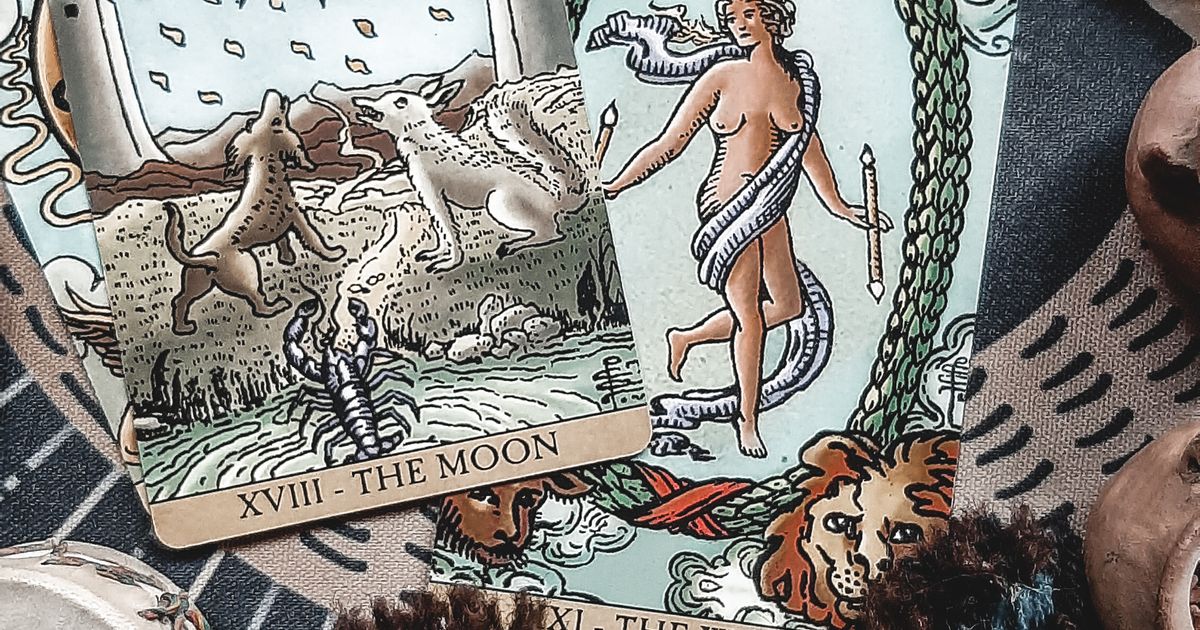
18. The Moon (Relationship Archetype)
You love through deep emotional attunement and the willingness to descend into feeling. The integrated form creates extraordinarily intuitive, emotionally resonant connection. The shadow projects unresolved fears onto partners and mistakes its own emotional weather for theirs.
19. The Sun (Relationship Archetype)
You love through radiant joy and authentic vitality. The integrated form brings warmth, clarity, and life-affirming energy to every partnership. The shadow needs constant mirroring and withholds closeness when it does not feel sufficiently seen.
20. Judgement (Relationship Archetype)
You love with purpose and calling. The integrated form finds partners who share a sense of mission and mutual awakening. The shadow perpetually evaluates the relationship against an ideal standard and is never quite satisfied.
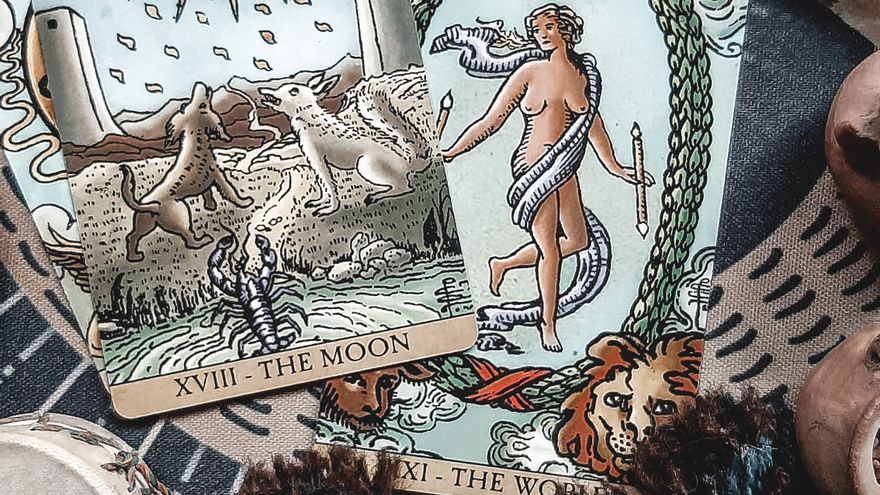
21. The World (Relationship Archetype)
You love through completeness and seasoned integration. The integrated form enters partnership from a place of wholeness rather than need, and co-creates from there. The shadow stays “almost ready” to commit and postpones full arrival indefinitely.
22. The Fool (Relationship Archetype)
You love through openness, joy, and the willingness to begin again. The integrated form enters relationships with genuine trust and delight. The shadow runs from commitment at the first sign of real depth, framing avoidance as freedom.
For the full meaning of each of these arcana beyond the relationship context, see our 22 Major Arcana meanings reference.
How Do You Use Your Love Line in Practice?
Using your Destiny Matrix Love Line well means recognizing your own pattern before projecting it onto a partner. As of 2025, Pew Research Center found that only 1% of U.S. adults rely “a lot” on astrology or tarot for major life decisions, while 5% rely “a little” (Pew Research Center, May 2025). The practitioners who get lasting results with clients do not use the line as a matchmaking tool; they use it as a mirror for the pattern the client carries.
Three practical questions to journal monthly:
-
Is my current relational style matching my romantic archetype? Look at how you actually show up in your closest relationships. Does the style match the arcana on Position 1? If your archetype is 9 (The Hermit) but you are in a relationship that demands constant social activity and emotional performance, expect chronic friction even when the love is genuine.
-
What is my relationship channel telling me? Position 2 describes how meaningful connection most reliably arrives for you. If your channel requires intellectual depth but you are in a relationship that stays on the surface, that gap is information. Naming it gives you something specific to address rather than a vague sense that something is missing.
-
Where is the block running me? Position 3 names the inherited pattern that most consistently disrupts connection. Most people skip this question because the block feels like reality: “I am just someone who needs space,” “I always attract unavailable people.” Name the pattern specifically, then practice one small behavior that contradicts it this week.
After more than a decade of readings, the biggest breakthroughs I see are almost always triggered by Position 3, the partnership block. Clients come in convinced the problem is their partner, or their timing, or their city. The block is almost always something they have carried since long before the current relationship. The moment they name it precisely and own it, the relationship usually shifts, even before any external conversation happens. What changes first is their response to their own pattern.

For step-by-step guidance on reading your full chart in the correct sequence, see our beginner’s 5-step walkthrough. For how your annual energy interacts with your relationship blueprint this year, see our 2026 Personal Year guide.
How Does the Love Line Compare to Other Chart Positions?
The Love Line is one of several positions that touch relationship themes, and reading them together produces a far more specific picture than reading any in isolation. The U.S. psychic services industry reached USD 2.3 billion in 2025 (IBISWorld, “Psychic Services in the US,” 2025), and the majority of paid sessions blend several positions when answering love and compatibility questions.
Love Line vs the Soul Arcana
Your central number, the Soul Arcana, describes the overarching theme of your whole life: your core lesson, your gift, your life-purpose character. The Love Line zooms in on how that soul-level theme expresses itself specifically in romantic partnership. Read the Soul Arcana first for the big picture, then read the line for the specific relational behaviors and patterns. These two together give the most complete picture available in a single chart reading. For a full breakdown of your Soul Arcana, see our Soul Arcana guide.
Love Line vs the Karmic Tail
Your three-number sequence at the base of the diamond names the past-life patterns and inherited family dynamics you are working through. When the Karmic Tail features themes around abandonment, betrayal, or unresolved grief, those themes almost always intensify the shadow of your Love Line’s partnership block. Reading both together reveals why certain relational patterns feel impossibly persistent. For the complete Karmic Tail context, see our 26 configurations guide.
Love Line vs the Personal Year
Your annual arcana describes the specific relational pressure or opportunity this year. A Tower (16) Personal Year for someone with a Hanged Man (12) romantic archetype reads as a year when old relational structures need to come down before genuine surrender becomes possible: a painful but necessary disruption. Read the Personal Year alongside the Love Line for the most actionable guidance in any given calendar year. See how this interacts with your chart in our Personal Year guide.
Love Line vs the Money Line
The Love Line and the Money Line run in opposite diagonal directions from the center of your chart: Love Line toward the top-left, Money Line toward the bottom-right. Practitioners note that the romantic archetype (Love Line Position 1) and the earning archetype (Money Line Position 1) frequently carry related shadow themes, since both are drawn from the same central Soul Arcana. When both lines share shadow expressions around fear, it tends to compound: financial blocks and relational blocks often reinforce each other. Reading both lines in the same session is standard practice for this reason. For the full Money Line context, see our Money Line guide.
Common Love Line Mistakes
Most misreadings come from a handful of predictable errors. Here are the ones to avoid.
Reading the line as a partner profile. The Love Line describes your relational pattern, not the qualities you need in a partner. Using it as a wishlist for another person’s traits misses the entire point of the system.
Skipping the shadow expressions. High expressions feel good to read; shadow expressions feel uncomfortable. Practitioners who skip the shadow are doing their clients a disservice. The shadow is where the actual work is, and it is the shadow, not the high expression, that is most active in most relationships at most times.
Reading Position 1 without Position 3. Your romantic archetype tells you your natural style. Your partnership block tells you what you do when that style feels threatened. You need both to understand your actual behavior in conflict.
Treating it as a fixed sentence. The arcana on your Love Line are not personality labels. They are energetic patterns with both integrated and shadow forms. They describe a polarity you are working with, not a box you are locked inside. Integration is possible, and the chart expects it.
Ignoring the Karmic Tail connection. For clients with persistent relationship difficulties, the Love Line alone never tells the complete story. The Karmic Tail often explains why the partnership block is so stubborn. Always cross-reference both when patterns refuse to shift.
Frequently Asked Questions
What is the Destiny Matrix Love Line and how do I find it?
The Destiny Matrix Love Line is a diagonal sequence of three to four arcana positions running from the center of your chart toward the top-left corner of the diamond. It maps your romantic archetype, relationship channel, and partnership block. To find it, generate your free chart at our Destiny Matrix tool and locate the diagonal positions running from your central Soul Arcana number toward the upper-left corner.
Can two people’s Love Lines be compatible?
Practitioners read compatibility by comparing both partners’ romantic archetypes at Position 1 and their partnership blocks at Position 3. Arcana in the same energetic family (both from the 1-7 group, or both from the 15-22 group) tend to produce natural resonance. Arcana with complementary shadow themes can produce growth-oriented friction. Neither pairing is inherently better; they require different kinds of conscious work.
For the full method of reading two whole charts together, see our Destiny Matrix compatibility guide.
How is the Love Line different from the Karmic Tail?
The Karmic Tail describes inherited past-life or family-system patterns that you carry into all areas of life, while the Love Line describes how those patterns specifically express in romantic partnership. The Karmic Tail is the underlying source material; the Love Line is where that material most visibly plays out in relationships. For the full Karmic Tail breakdown, see our karmic configurations guide.
Can my Love Line change over time?
The numerical positions on your Love Line are fixed from birth and do not change, because they are derived from your birth date. What changes is your level of integration with the arcana. The high expressions of each position become more accessible as you do the inner work of recognizing and interrupting the shadow patterns named by Position 3.
Do I need a professional reading to interpret my Love Line?
No. The positions are calculated from your birth date, the formula is publicly documented, and the arcana meanings are consistent across most practitioner schools. Start by generating your chart and identifying your three core positions. Use this guide to interpret them. A professional session adds contextual nuance, cross-position connections, and a trained practitioner’s pattern recognition, but the foundational self-reading is accessible without one.
Sources
- Pew Research Center. “3 in 10 Americans Consult Astrology, Tarot Cards or Fortune Tellers.” May 21, 2025. Retrieved 2026-06-03. https://www.pewresearch.org/religion/2025/05/21/3-in-10-americans-consult-astrology-tarot-cards-or-fortune-tellers/
- IBISWorld. “Psychic Services in the US — Market Size and Industry Report.” 2025. Retrieved 2026-06-03. https://www.ibisworld.com/united-states/market-size/psychic-services/4413/
- thematrixofdestiny.com. “Love Line.” 2026. Retrieved 2026-06-03. https://www.thematrixofdestiny.com/love-line
- destinynums.com. “The Relationship Line.” 2024. Retrieved 2026-06-03. https://www.destinynums.com/en/the-relationship-line/
- Taroscoper. “Arcana Destiny Matrix Explained.” 2026. Retrieved 2026-06-03. https://www.taroscoper.com/guides/arcana-destiny-matrix-explained